QUICK ANSWER
The short version
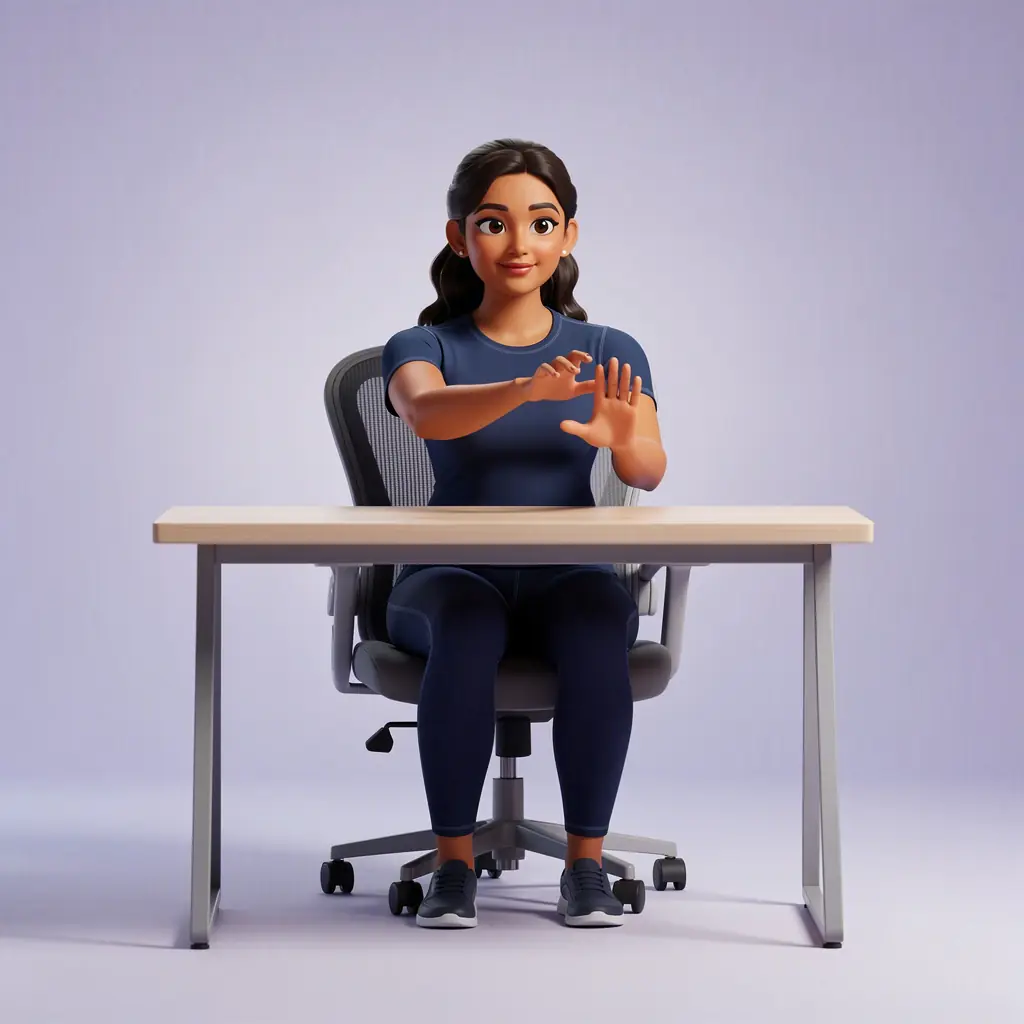
For desk mobility, change your position first, then use small wrist circles, comfortable neck turns, and a seated side reach. Repeat the two-minute sequence every few hours instead of pushing into one intense stretch.Desk mobility means avoiding one fixed position for too long; it does not mean forcing a larger range of motion. A useful reset may be changing the chair angle, resting your hands, or walking to refill a glass. Repeatability matters more than intensity.
Change the setup before stretching
Move the chair, stand, or place both feet on the floor. Check the easy variables first: are you leaning toward the screen, gripping the mouse, or sitting on one foot because you have stayed in the same shape? A different supported position may be enough.
Use small, comfortable ranges
Try three slow wrist circles each way, turn your head only as far as feels easy, then add a seated side reach. Keep your hips heavy and breathe normally. Small movements fit between tasks and do not require a warm-up, workout clothing, or privacy.
Repeat instead of trying to conquer stiffness
A two-minute reset every few hours may fit a workday better than one demanding session at night. Attach it to an existing cue: after sending a report, before tea, or when a meeting ends. A visible cue makes the habit less dependent on motivation.
TRY IT NOW
A simple way to practise
- PositionStand, adjust the chair, or plant both feet before adding movement.
- MobiliseUse slow wrist circles, a comfortable neck turn, and one easy side reach.
- Repeat laterChoose a regular work cue for another two-minute reset.
COMMON QUESTIONS
Good to know
How often should I move during a desk job?+
There is no single schedule for everyone. Change position regularly enough that you are not waiting for intense discomfort; brief, repeatable breaks are often easier to sustain.
Can desk stretches fix posture?+
No single stretch creates a perfect posture, and there is no need to hold one rigid position. Aim for varied, supported positions and seek individual advice for persistent symptoms.
A note on safety. This guide offers general wellbeing education, not medical advice or treatment. Stop for pain, dizziness, numbness, weakness, or anything that feels wrong for your body.