QUICK ANSWER
The short version
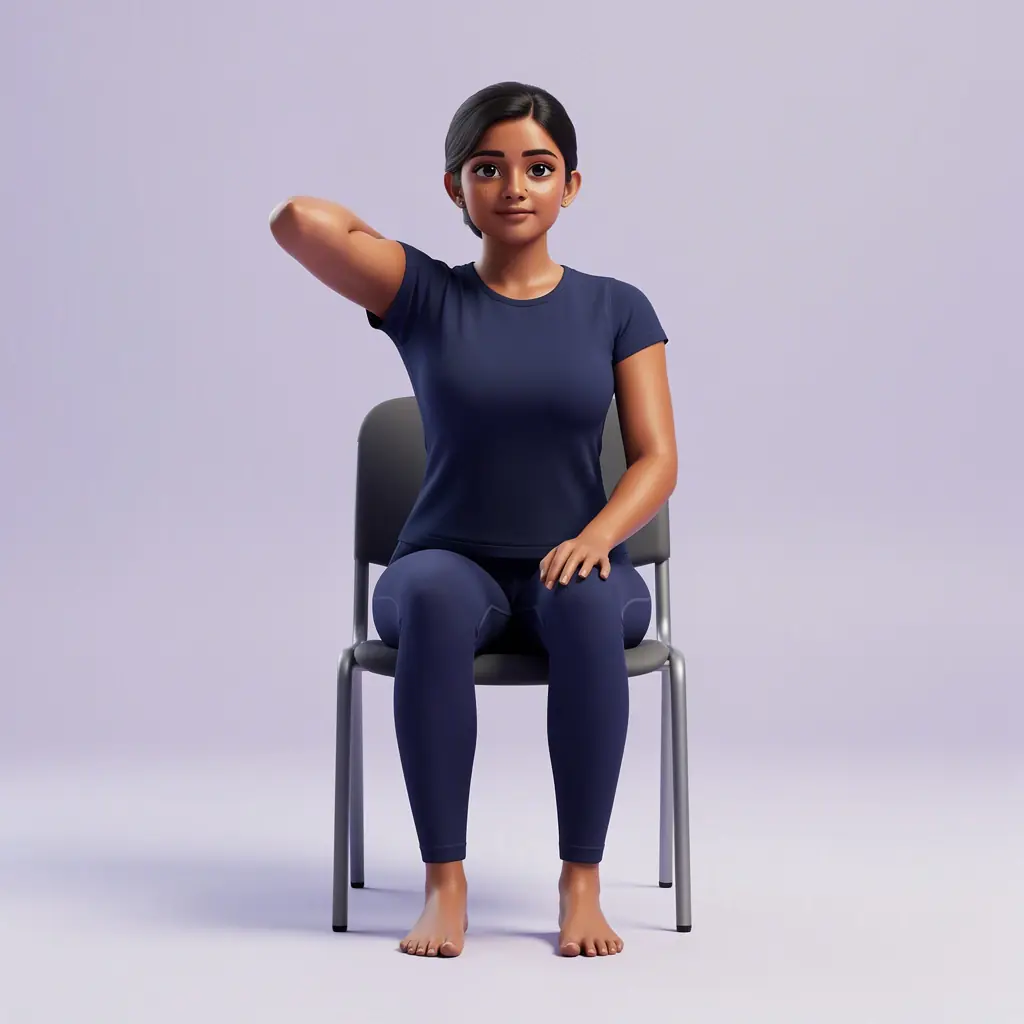
For a quick desk stretch, plant both feet, make two slow shoulder rolls, use a gentle cross-body reach on each side, then look across the room for several ordinary breaths. Keep the range easy and stop for pain, tingling, numbness, or dizziness.Stiff shoulders after desk work are often a cue to change position, not to stretch harder. This no-floor routine takes five minutes beside a chair. It is designed as a comfortable movement break, not a posture correction or treatment.
Start smaller than you think
Let your arms rest by your sides and put both feet on the floor. Slowly roll the shoulders back twice, then let them settle rather than holding them there. Notice whether your jaw, hands, or brow are working harder than they need to. The goal is an easy change of position, not a forceful release.
Make room across the upper back
Reach one arm forward at shoulder height. With the other hand, lightly guide it across your chest until you notice a mild sensation around the upper back or shoulder. Keep the shoulder away from your ear, breathe normally for three to five breaths, then switch sides. Lower the arm if your neck starts to work.
Finish with a distance break
Rest your hands and look at something across the room or out a window. Let your eyes focus at a different distance for several ordinary breaths. This makes the reset useful for more than the shoulders: it also interrupts the close, fixed attention of screen work.
TRY IT NOW
A simple way to practise
- Minute 1 — arrivePut both feet down, rest your hands, and take two unhurried breaths.
- Minutes 2–3 — roll and reachMake two slow shoulder rolls, then use a comfortable cross-body reach on each side.
- Minutes 4–5 — reset your gazeRelax your arms, look into the distance, and decide whether water or a short walk would help.
COMMON QUESTIONS
Good to know
Can I do this desk stretch without standing up?+
Yes. All three parts can be done seated with both feet supported. Keep your back in a position where breathing feels easy.
Should a shoulder stretch feel intense?+
No. Use a mild, breathable range. Stop if you feel sharp pain, tingling, numbness, dizziness, or sudden weakness.
A note on safety. This guide offers general wellbeing education, not medical advice or treatment. Stop for pain, dizziness, numbness, weakness, or anything that feels wrong for your body.