QUICK ANSWER
The short version
Before presenting, spend one minute noticing your natural breath, three minutes making each exhale slightly longer without holding your breath, and one minute choosing a simple intention such as ‘speak slowly.’ Return to normal breathing if you feel light-headed or more tense.Pre-presentation nerves are a normal response to a demanding moment. This discreet breathing practice does not try to erase them. It gives your attention a simple sequence while you wait to speak, without breath holds or exaggerated inhalations.
Begin with your ordinary breath
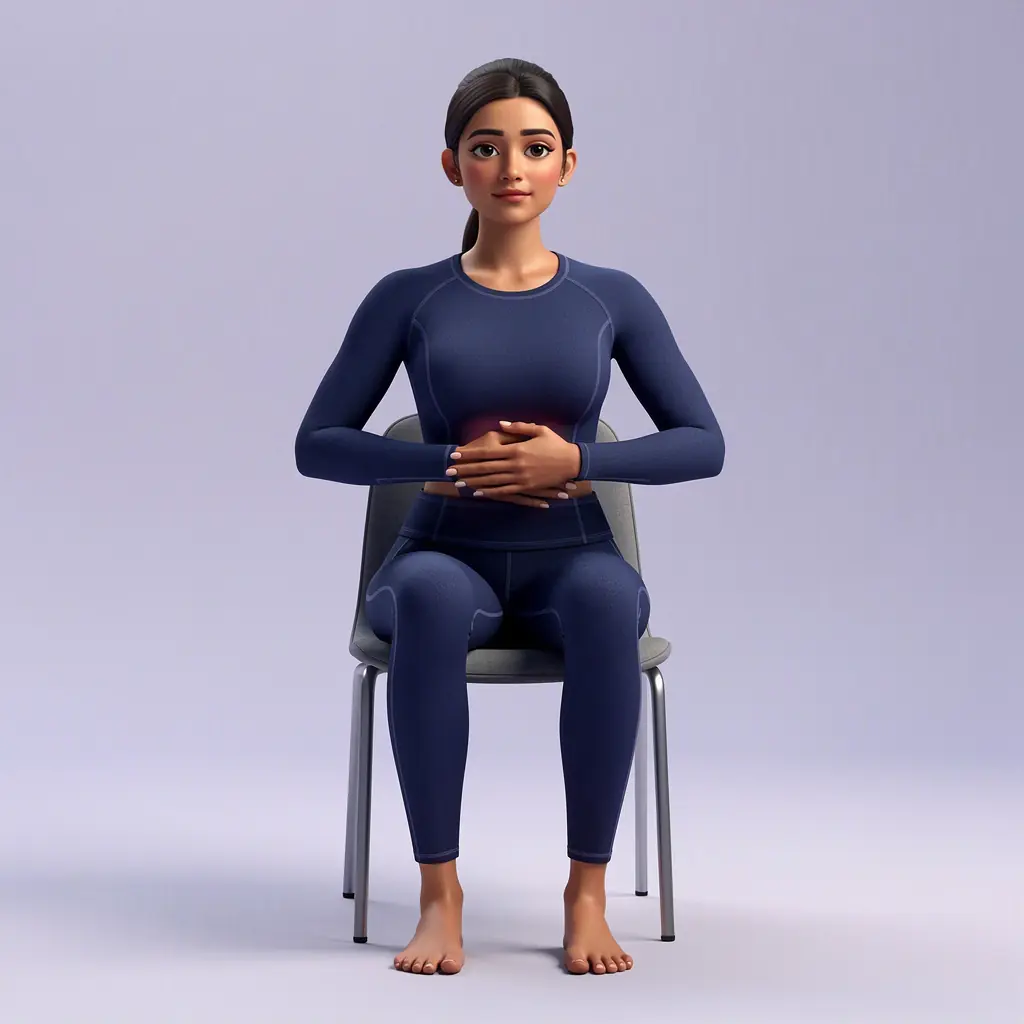
Sit or stand in a position that does not need fixing. Soften your shoulders and hands, then notice the natural inhale and exhale for about a minute. Starting with what is already happening is often steadier than immediately taking large breaths.
Make only the exhale a little longer
Let the inhale arrive naturally. Allow the exhale to become slightly slower and quieter, as though gently fogging a mirror with your mouth closed. Do not empty your lungs forcefully. Skip breath holds, and return to an ordinary breath if you feel light-headed, air-hungry, or more tense.
Take one useful sentence into the room
Before joining, choose one plain intention: speak slowly, make one point, or ask one good question. Write it down if possible. An anchor gives your attention a realistic job; you do not need to feel completely calm before speaking well.
TRY IT NOW
A simple way to practise
- Minute 1 — observeNotice a natural inhale and exhale without trying to deepen either one.
- Minutes 2–4 — softenLet each exhale run slightly longer while the inhale remains easy. Do not hold your breath.
- Minute 5 — orientLook around the room and repeat one simple speaking intention.
COMMON QUESTIONS
Good to know
What breathing exercise is best before public speaking?+
A simple longer-exhale breath is discreet and easy to stop: inhale naturally and let the exhale become slightly slower. Avoid forcing deep breaths or long holds.
What if breathing exercises make me dizzy?+
Stop the exercise and return to ordinary breathing. Sit or stand somewhere stable. If dizziness persists or concerns you, seek appropriate medical guidance.
A note on safety. This guide offers general wellbeing education, not medical advice or treatment. Stop for pain, dizziness, numbness, weakness, or anything that feels wrong for your body.